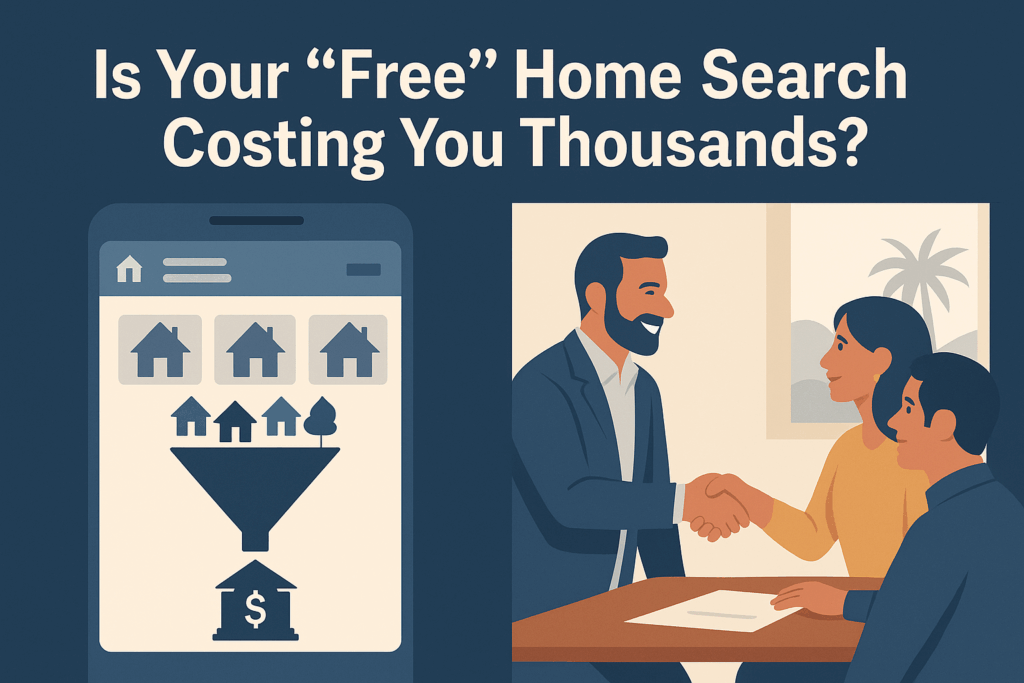
What the New Zillow Lawsuit Means for Homebuyers
If you’ve ever clicked “Contact Agent” on a big real estate website and wondered who you were actually talking to, you’re not alone.
A brand-new class-action lawsuit filed in November 2025 against Zillow is raising serious questions about how those platforms use your data—and whether some buyers may have been quietly steered into mortgage loans that weren’t truly in their best interest.
This post isn’t about bashing any one company. It’s about pulling back the curtain so you can make smarter choices about where you search, who you hire, and how you pick a lender—and why working with an independent, referral-based local agent (like us) is a very different experience than being funneled through a giant portal.
What the new Zillow lawsuit is about (in plain English)
On November 7, 2025, a homebuyer filed a class-action lawsuit against Zillow, claiming the company used its huge online traffic and lead-generation programs to pressure real estate agents into steering buyers toward Zillow Home Loans.
The lawsuit alleges that:
• Zillow gave valuable buyer leads to certain agents and teams only if they hit targets for sending those buyers to Zillow’s own mortgage company.
• Agents who met those targets supposedly received more or better-quality leads.
• Agents who didn’t play along risked losing access to Zillow’s most lucrative lead programs.
• Buyers were often never told that their agent’s access to those leads (and a big slice of their income) depended on using Zillow Home Loans.
Under federal law (RESPA), it’s illegal to give or receive a “thing of value” in exchange for referrals of mortgage business. This lawsuit argues that access to Zillow leads was the “thing of value,” and that tying those leads to mortgage referrals created serious conflicts of interest.
To be clear, these are allegations, not proven facts, and Zillow will have its opportunity to respond in court. But the case has already sparked an important conversation:
Are some real estate agents being put in a position where their lead pipeline matters more than a client’s best interests?
Why this matters to you as a buyer
Let’s set the legal language aside and talk about what this means in real life.
If a platform controls the leads and uses those leads to reward or punish agents based on which lender you use, that creates three big risks for buyers:
1. Conflicted advice
Your agent might feel pressure to push a particular lender, not because it’s truly the best option for you, but because they’re afraid of losing the lead flow that feeds their team and payroll.2. Higher costs and fewer choices
The lawsuit claims that buyers funneled through this system often ended up paying higher interest rates and fees than similar buyers who worked with independent lenders. Even a small bump in rate can add up to tens of thousands of dollars over the life of a mortgage.3. Lack of transparency
Most consumers had no idea there might be lead quotas, internal scoreboards, or hidden referral arrangements behind the scenes. They simply thought they were clicking a button to ask a question about a property.When you think you’re getting neutral, fiduciary advice from someone you trust—but there’s an invisible business model pulling strings in the background—that’s a problem.
How our business model is different (and why that should matter to you)
Here’s where our approach is very different from the lead-funnel model you see on big portals.
We don’t depend on Zillow for our business
Most of our business comes from repeat clients and referrals from happy past clients, not from buying leads off national websites.
That means:
• We don’t live or die by a third-party lead platform.
• We don’t have to hit anyone’s mortgage-referral quota to stay in business.
• We have zero incentive to steer you toward any lender that isn’t a great fit for you.
When we recommend a lender, it’s because they’ve earned our trust over time by taking excellent care of our clients: clear communication, on-time closings, competitive pricing, and honest problem-solving when little surprises pop up.
You search safely on our website—not a portal that sells your data
When you search on our website, you’re using a home search that we own and control, connected directly to the MLS.
That means:
• Your contact info isn’t blasted out to multiple agents you’ve never met.
• Your data isn’t treated as a product to be packaged and sold.
• You get a direct relationship with one local agent (us) who is accountable to you.
No hidden referral agreements. No mystery agent. Just a straight line between you and the people actually helping you buy or sell your home.
We encourage you to shop lenders—seriously
We absolutely have trusted lending partners we like and recommend. But here’s our stance:
• You should feel free to compare multiple lenders.
• You should ask each one to clearly lay out their rates, fees, and total monthly payment.
• You should see side-by-side options so you can choose what fits your goals and comfort level.
If the lender we recommend ends up being the best fit for you, great. If another lender can legitimately serve you better, we want you to choose that option. Our job is to be your guide and advocate, not a gatekeeper who controls where your loan goes.
Our loyalty is to your long-term results, not to any particular lender or referral agreement.
If you’d like a deeper dive into how to compare lenders and protect yourself, you’re always welcome to join our free Buyer Workshop.
Questions every buyer should ask their agent
Whether you work with us or another agent, here are a few questions you should feel completely comfortable asking:
1. Do you pay for leads from Zillow or other portals?
If the answer is yes, ask how that affects who contacts you and who’s allowed to work with you.
2. Are you required to recommend a particular lender?
A true advocate should be able to say “no” without hesitation.
3. Do you receive any financial benefit if I use a specific lender or title company?
Some affiliated arrangements are legal if they’re properly disclosed—but you deserve to know.
4. How many lenders do you typically introduce your clients to?
One lender isn’t automatically bad, but it’s fair to ask why.
5. If I find my own lender, will that change anything about how you work with me?
The right agent should say something like: “Not at all. My job is to help you get the best overall outcome, no matter which lender you choose.”
The bottom line: choose representation, not a funnel
Big real estate portals are incredibly convenient for browsing. We use them too. But convenience should never come at the cost of unbiased advice, freedom of choice, or thousands of dollars in extra loan costs.
If you’d rather have a real relationship with a local professional whose business isn’t controlled by a tech company’s lead quotas, we’d love to talk.
We’ll help you:
• Search the full MLS on a site we own and control.
• Compare solid local and national lenders (or bring your own).
• Understand your options clearly so you can make confident decisions.
• Navigate your purchase or sale with someone whose loyalty is to you, not to a lead seller.
Thinking About Buying or Selling in the High Desert or Inland Empire?
If you’d rather work with a local agent whose business isn’t controlled by big portal lead quotas or lender kickbacks, we’d love to be your real estate resource.
No quotas. No steering. Just honest guidance from people who plan on being your real estate resource for life — not just your lead for the next closing.
